Overview
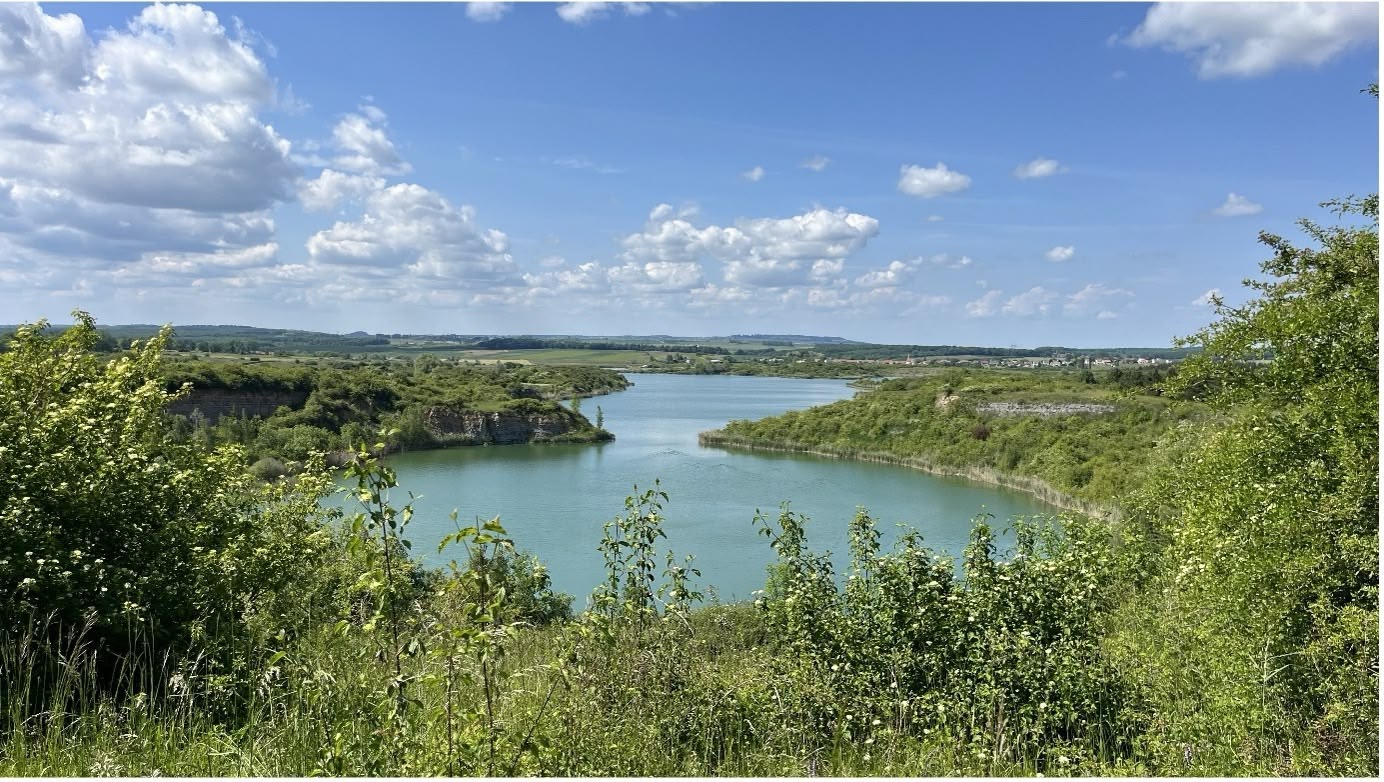
Solvay, a Belgian multi-specialty chemical company, is one of the world's leading producers of soda ash. The company manages important landholdings and quarries to produce sodium carbonate from mineral raw materials and has a commitment to dedicate 30% of its permeable land located near biodiversity-sensitive areas to conservation and restoration, with measurable positive impacts by 2030. In 2025, the company started a three-year collaboration with IUCN, selecting its Dombasle-sur-Meurthe soda ash plant in France — which has produced soda ash on the Meurthe River since 1873 — as its first pilot site. An independent site review was performed to assess Solvay's approach to biodiversity and explore options for enhancing biodiversity value across the plant and its associated limestone quarry.
In this context, Solvay and IUCN piloted the IUCN RHINO approach to understand how using a science-based metric like STAR could further inform Solvay's biodiversity action plans and strengthen its species-related disclosures. Between 2025 and 2026, the Locate and Evaluate phases of the IUCN RHINO approach were completed, and important threats were identified by Solvay as part of the Assess phase. The next phase of the project will focus on socialising results with stakeholders to complete the Assess phase and, in line with the Prepare phase, to develop a shared action plan, contributing to Solvay's biodiversity roadmap and aligned with the Kunming-Montreal Global Biodiversity Framework.
Share this post


Take your first step to Nature Positive outcomes
IUCN RHINO guides what to do, where to act, and how to measure progress towards Nature Positive outcomes.